
Evidence
What we know. And how we know it.
Independent mosquito testing, operating experience and clear limits on what each result demonstrates.
Barrier testing
ZikaSeal blocks 99% of mosquito traffic to and from the catch basin.
Independently tested by EID Méditerranée, Montpellier, outdoors over two months in the autumn of 2024. The full report is available on Our solution.
The study did not assess whether the device stays watertight over time. It was an entomological study and did not cover hydraulics; those are tested in Copenhagen, where units have been in a live road since June 2024 — see the Copenhagen installation below.
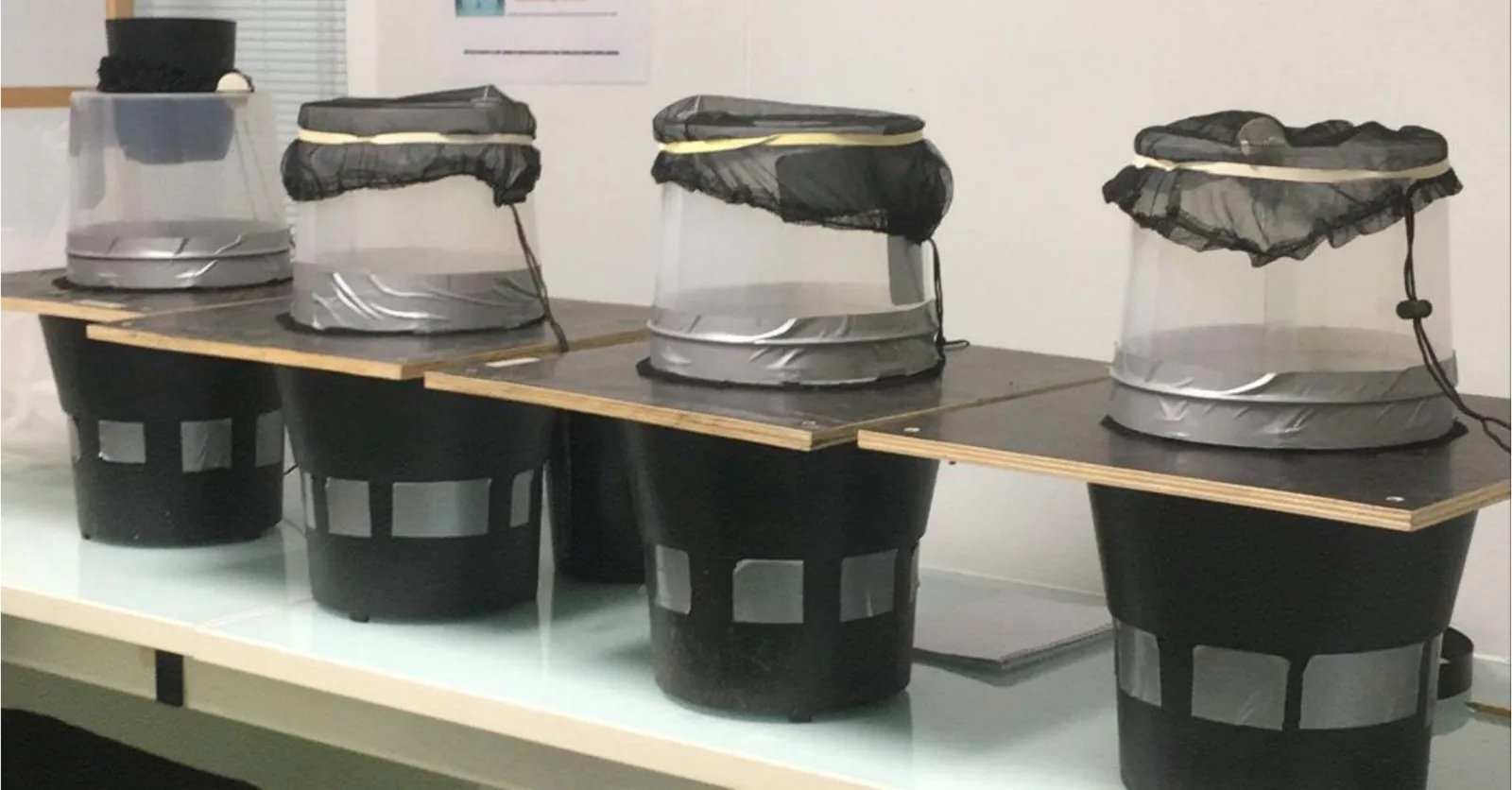
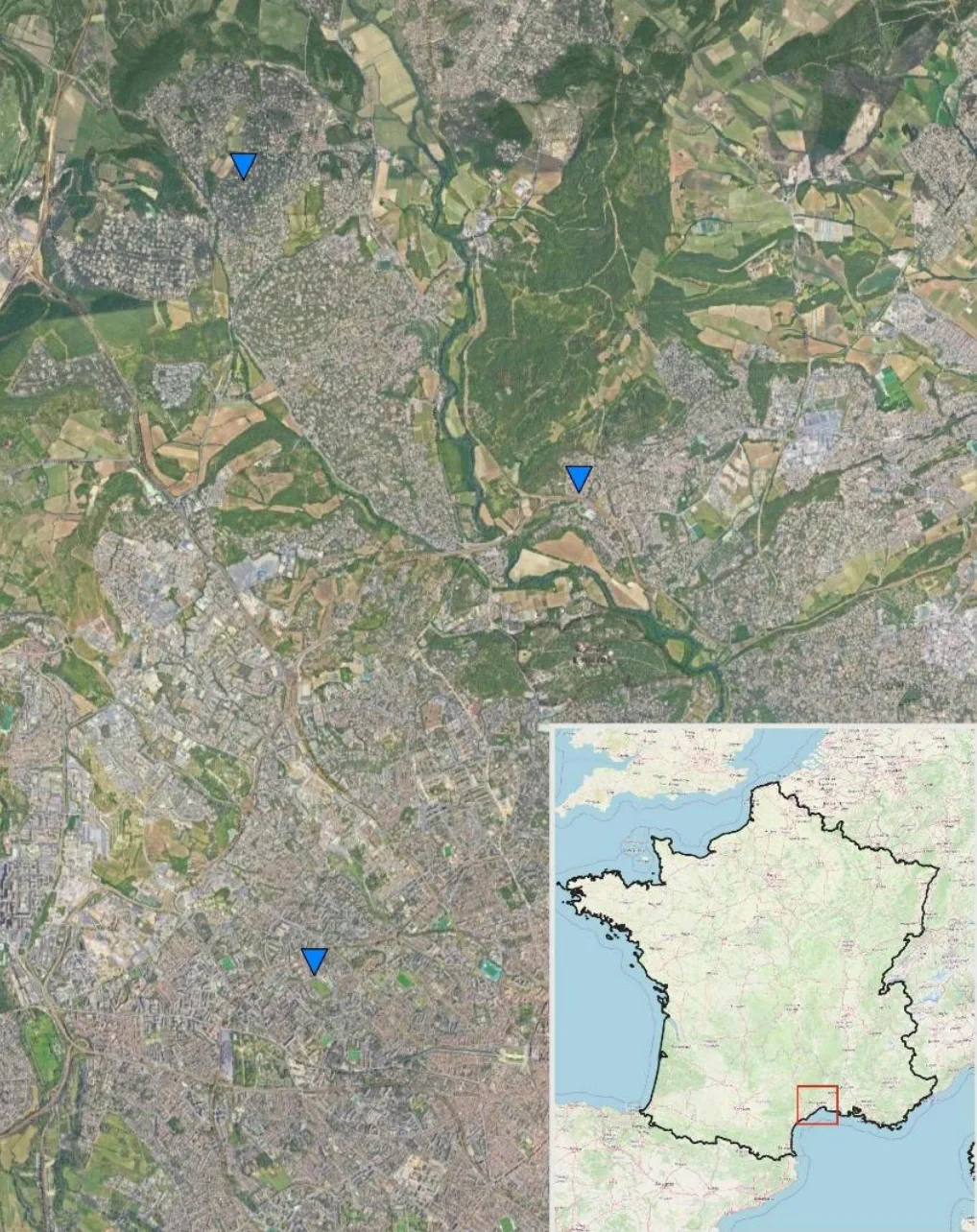
The second trial ran at three sites near Montpellier: private gardens in Saint-Clément-de-Rivière and Clapiers, and the EID Méditerranée site. Each had one set-up fitted with ZikaSeal and one control, at least ten metres apart.
“The set-ups fitted with Zikaseal™ were always installed in what we considered to be the most favourable locations, i.e. in the vegetation and away from direct sunlight.”
What this trial does — and does not — show
The result concerns mosquito passage in the trial conditions.
It does not demonstrate a 99% reduction in disease or in city-wide mosquito populations. Long-term sealing performance and hydraulics were outside the trial’s scope, and Culex pipiens was not assessed in a separate species-specific trial.
EID’s finding is that no species colonised the protected setups in that trial. The test was carried out on Aedes albopictus, the Asian tiger mosquito. What this means for Culex pipiens is set out in Two species, one barrier.
Separately, and as our own design criterion rather than a finding of the study: all openings in the device are below 1.0 mm.
Three cities. Different questions.
- CopenhagenFlow, debris and durability.Six catch basins since June 2024.
- GrazOperation in municipal streets.Six months through the 2026 season.
- MonacoDesign and fit.Completed geometry adaptation test.
Copenhagen — flow and blockage, since June 2024
Six catch basins in a road through a forest park, inspected every month. Two and a half seasons with no blockage, no obstruction of flow, no functional failure and no maintenance — not one barrier insert has been replaced.
The units are there with the city’s permission. Not a mosquito trial: Denmark has no established Aedes albopictus population. They test what the EID report did not — whether the device blocks or restricts flow, under the leaf fall and debris that make a road under trees a demanding site.
Monthly inspection is a trial regime, not an operating recommendation. In normal operation we ask for one inspection a year, set out under Our approach.
Six basins is operating experience, not a controlled study, and not a substitute for a hydraulic calculation. Two and a half seasons without a replacement is, however, the only field evidence behind the expected 5-year service life of the barrier insert.
Graz, Austria — the operational test
ZikaSeal barriers are installed in catch basins in the city, which runs an established chemical-control and entomological-surveillance programme. Across six months of operation through the 2026 season, not one fault was reported in the ZikaSeal app, which municipal staff use to log any problem with an installation.
In November 2026 the installations were inspected on site, with the city’s entomologist and Holding Graz – Kanal present, and no blockages or operating problems were found. All three parties agreed afterwards that the trial had been a success and the result satisfactory. Café owners on the installed streets reported, without being asked, that the smell from the drains had stopped.
This is an account of operation agreed by the three parties. It is distinct from an independent efficacy evaluation.
Monaco — a design and fit test
A design and fit test, confirming that the barrier could be built for the city’s drain geometry. Completed.
It was not the same kind of test as Graz: Monaco confirmed design and fit, and the barrier has not been in service there.
Graz and Monaco were the two pilot cities of our ESA Kick-Start project, which ran from March to August 2026 and is completed. The two were not the same kind of test: Monaco confirmed design and fit and is finished, Graz is the operational test and has run through a full season.
Planning a deployment of your own? We can take you through these results for your city.
Risk model: ESA Kick-Start project
ZikaSeal ApS carried out a Kick-Start project with the European Space Agency. It ran from March to August 2026, closed with its final review on 18 August 2026, and is completed. The project built a satellite-based service that ranks a city’s drains by how likely they are to be mosquito breeding sites, so that municipalities can place barriers where they matter instead of treating every drain.
The two pilot cities, as ESA describes them:
- Monaco, a Mediterranean city with no formalised control programme
- Graz, Austria, a Central European city with an established chemical-control and entomological-surveillance programme
Result: the model reached proof of concept, with a correlation of R² ≈ 0.55–0.65 against observed mosquito intensity (technology readiness level 5–6). It is in development, not a validated operational tool; the Montpellier map on Our solution is a demonstration, not an operational risk forecast.
Source: ESA Business Applications, project “ZikaSeal” (status updated 28 September 2026).
What others have published.
Read the City of Graz’s description of the project and independent media coverage, with links to the original sources.
News and pressQuestions about the results?
We can walk your technical team through the study, the operating experience and the remaining uncertainties.
Discuss the evidence